When producing modern Jungle, the low end is everything. But pairing chopped, pitch-shifted amen breaks with an aggressive, modulated reese bassline is a notorious recipe for a muddy mixdown or a master that chokes the moment the drop arrives.
With "Jungle Pressure," the mission was clear: deliver maximum amen break energy without sacrificing that deep, chest-thumping sub-bass weight on large sound systems. Here is the exact workflow behind the production, mixdown, and mastering stages to ensure the low end remained the undisputed focal point of the track.
1. Decoupling the Bass: Dedicated Sub Sine vs. Mid Dirt
A common mistake when designing aggressive jungle basslines is trying to make one single synth patch do everything. The chorus, detuning, and unison spread that give a reese its stereo growl will destroy your mono low-end punch through phase cancellation.
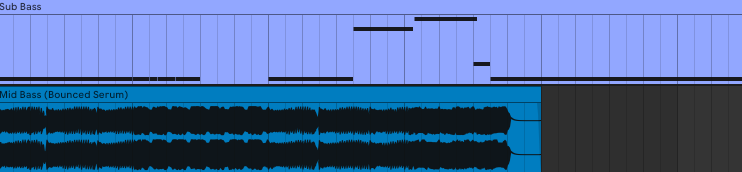
- The Sub Anchor: A dedicated sine/triangle sub track operating strictly in mono between 35 Hz and 90 Hz. No stereo chorus, no pitch drift, no modulation.
- The Mid Growl: A separate reese layer—bounced to audio from Serum—high-passed sharply above 100 Hz to strip out competing low-end information. This allowed the mid-range harmonics to be widened, filtered, and saturated aggressively without touching the foundational sub frequencies below it.
2. Drum Bus Processing: Sculpting Fat Breakbeats
Chopped amens need weight and transient crunch, but loose vintage breaks also carry low-mid boxiness and unnecessary low-end rumble that eats up valuable headroom.

- Pre-Bus Filtering (EQ Eight): A clean high-pass cut at 124 Hz rolls off sub-low thuds from the break slices, letting the dedicated sub bass handle the bottom octave exclusively.
- Saturation & Crunch (Drum Buss): Driving the breaks with 17% Drive (Soft mode) and 9.5% Crunch introduces warm harmonic grit, gluing disparate chopped break slices into a cohesive, vintage break. The Transients knob set to 0.10 sharpens drum attacks without over-extending crash decays.
- Peak Catching (Glue Compressor): Dialled with a 1 ms attack, fast 0.1s release, and Soft Clip engaged to shave down runaway snare and crash transients before they hit the mixdown bus.
3. Clearing the Runway for the Kick
Even with the breaks rolled off, the kick drum needs room to knock through sustained sub passages:
- Transient Ducking: A fast sidechain was set up to dip the 45–95 Hz region of the sub by 2 to 3 dB solely during the kick's initial transient.
- Fast Recovery: With a near-zero attack and an ultra-short release (around 30–50 ms), the sub ducks only for the kick's knock and snaps back instantly to full power, avoiding audible volume pumping.
4. Master Maximization & Low-End Focus (Ozone 11)
A mixdown peaking with clean linear headroom (-6 dB True Peak) allowed the master chain to do the heavy lifting cleanly without choking the low end.
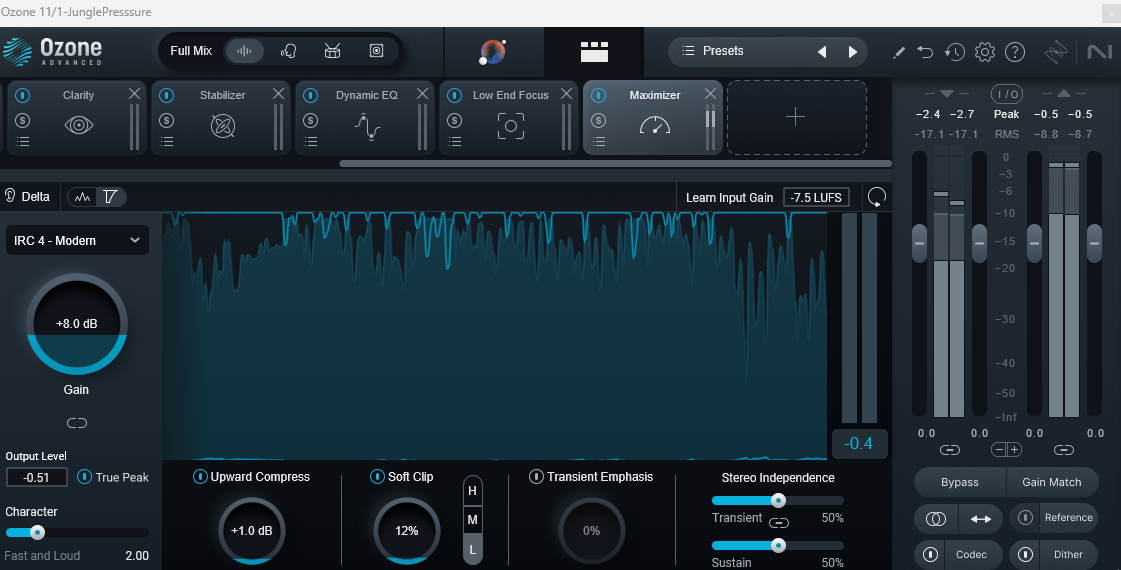
The Loudness Secret: Soft Clip Before Limiting
Pitched amen snare rolls create microsecond peak spikes that cause limiters to aggressively clamp down and duck the sub. Engaging Soft Clip (12% Light) shaves 1.0 to 1.5 dB off those transient peaks instantly, meaning the limiter never pulls down the sustained bass underneath.
- Maximizer Calibration: +8.0 dB Gain driving IRC 4 (Modern) into an output ceiling of -0.51 True Peak. This kept gain reduction hovering in the sweet spot (1.5 to 2.5 dB) during the heaviest drops rather than over-squashing the track.
- Upward Compress (+1.0 dB): Set conservatively to bring up subtle breakbeat ghost notes and room ambiance without flattening the dynamic crest factor of the drop.
- Low-End Focus: Set with subtle contrast below 90 Hz to keep the kick/sub separation punchy and defined on high-output sound systems.
Preserving low-end weight on club rigs is never about endlessly pushing bass faders—it comes down to strict mono containment, selective frequency carving, and taming drum transients before they slam your limiter.
"Jungle Pressure" is out now on Subdivided Audio.